
A pre-works condition survey is an unusual piece of work. You produce it now, nobody reads it, and its entire value is realised at some unpredictable future moment when a claim lands and someone needs to know what a wall looked like before the excavator arrived.
That makes it different from almost every other survey. You are not writing for the client. You are writing for an adversarial reader, two or three years out, who will be looking specifically for the gap.
Here is how to capture one so it holds.
Assume the reader is hostile and absent
The person who eventually matters is not on the distribution list. They are acting for an owner who says the crack is new, and their job is to find the reason your baseline does not settle it.
They will look for four things, in this order:
- Is this actually the same wall? Ambiguity about location kills more baselines than poor photography.
- When exactly was this? Before or after the works started is the whole question.
- Was the defect visible then, or just not recorded? An absent observation is not evidence of absence.
- Is anything obviously missing from the sequence, such that the record looks selective?
Every habit below exists to close one of those.
Locate before you describe, every single time
Say the address, the elevation and the room out loud as you enter, using the words the drawings use.
Number 14, rear elevation, ground floor, north east bedroom.
This is the single most valuable sentence in the whole capture and it is the one most often skipped, because when you are standing there it feels obvious which bedroom you are in. In three years, from footage alone, it is not.
If the property has no drawing references, make your own and say them consistently. Consistency beats correctness here.
Establish, then approach
For each room or elevation, capture in two movements.
Establish. A slow, wide pass that shows the whole surface and its relationship to the things around it. Doors, windows, floor line, ceiling line. This is what proves the close-up you take next belongs to this wall and not a similar one two doors down.
Approach. Then move in on anything notable and hold on it. Do not zoom from across the room. Walk in, so the footage carries the continuity between the wide shot and the detail. A continuous move is much harder to dispute than two separate photos.
Record the negatives out loud
This is the habit that specifically wins arguments.
Ceiling to this room, no cracking visible. Cornice sound, no separation at the wall junction.
You are creating a record that you looked and found nothing, which is a completely different thing from a record that says nothing. When a claim arrives about that ceiling, the first sentence is evidence and the silence is not.
You cannot do this for every surface in a building. Do it for the ones adjacent to the works, on the load path, and anywhere a reasonable person would expect movement.
Put a scale on anything you might have to argue about
A crack in a photo has no width. If you are recording something that could become the subject of a “has it moved” question, get a gauge, a rule or a coin in the frame, and say the measurement aloud as well.
Hairline to the render below the sill, roughly point four, measuring at the widest point.
If you did not measure it, say that too. “Eyeballing it at about two millimetres” is honest, useful, and much better than a confident number you cannot stand behind.
Timestamp yourself deliberately
File metadata is good evidence and it is also the first thing someone tries to cast doubt on. Belt and braces costs you three seconds: say the date aloud at the start of each property, and capture something in-frame that fixes the time if it is available, such as a dated notice or the works hoarding.
You are not doing this because you expect to be disbelieved. You are doing it because the cost is three seconds and the cost of the alternative is the whole baseline.
Walk the boundary and the approach
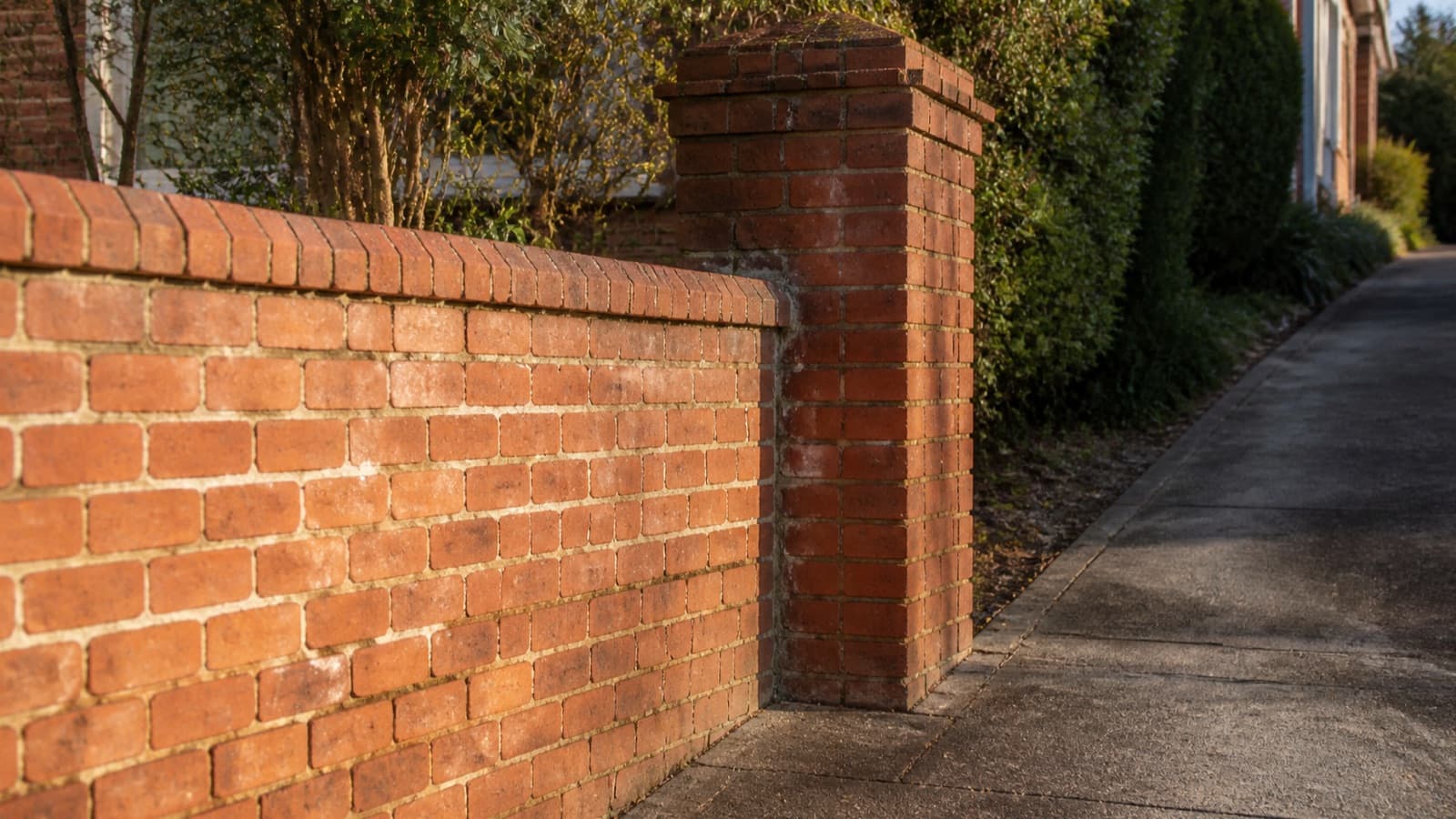
Most disputes on corridor work are not about the room you were sent to look at. They are about the path, the driveway, the boundary wall, the gate post and the kerb, because those are what heavy vehicles actually hit.
Capture them even when they are not on the schedule. They are cheap to record and they are where the claims come from.
Close each property
One sentence on the way out.
That is number 14 complete. Front, rear and both flanks, all rooms except the locked garage, which I could not access.
That last clause matters more than the rest of the sentence. A record that states its own gaps is credible. A record that silently omits the garage looks like it is hiding something the day someone notices.
The post-works pass
When you come back, walk it in the same order, with the same words.
Sequence and vocabulary consistency is what turns two surveys into a comparison. If the baseline says “rear elevation, ground floor, north east bedroom” and the post-works pass says “back bedroom”, you have created work for yourself and doubt for everyone else.
Why we care about this one
The corridor pre-and-post pair is the clearest case we know of where the value of a record appreciates with age, and where the thing that destroys that value is not bad photography but missing context.
Sully keeps the walkthrough and the narration together, so the locating sentence, the negative observation, and the spoken measurement stay attached to the footage they belong to, and stay searchable years later when someone asks what number 14 looked like in August. The draft it produces is a draft. You review it, correct it and sign it.
But the routine above works with any phone and a voice memo, and it is worth adopting on its own. The baseline you capture this month is the one that has to answer a question nobody has asked yet.